On this page
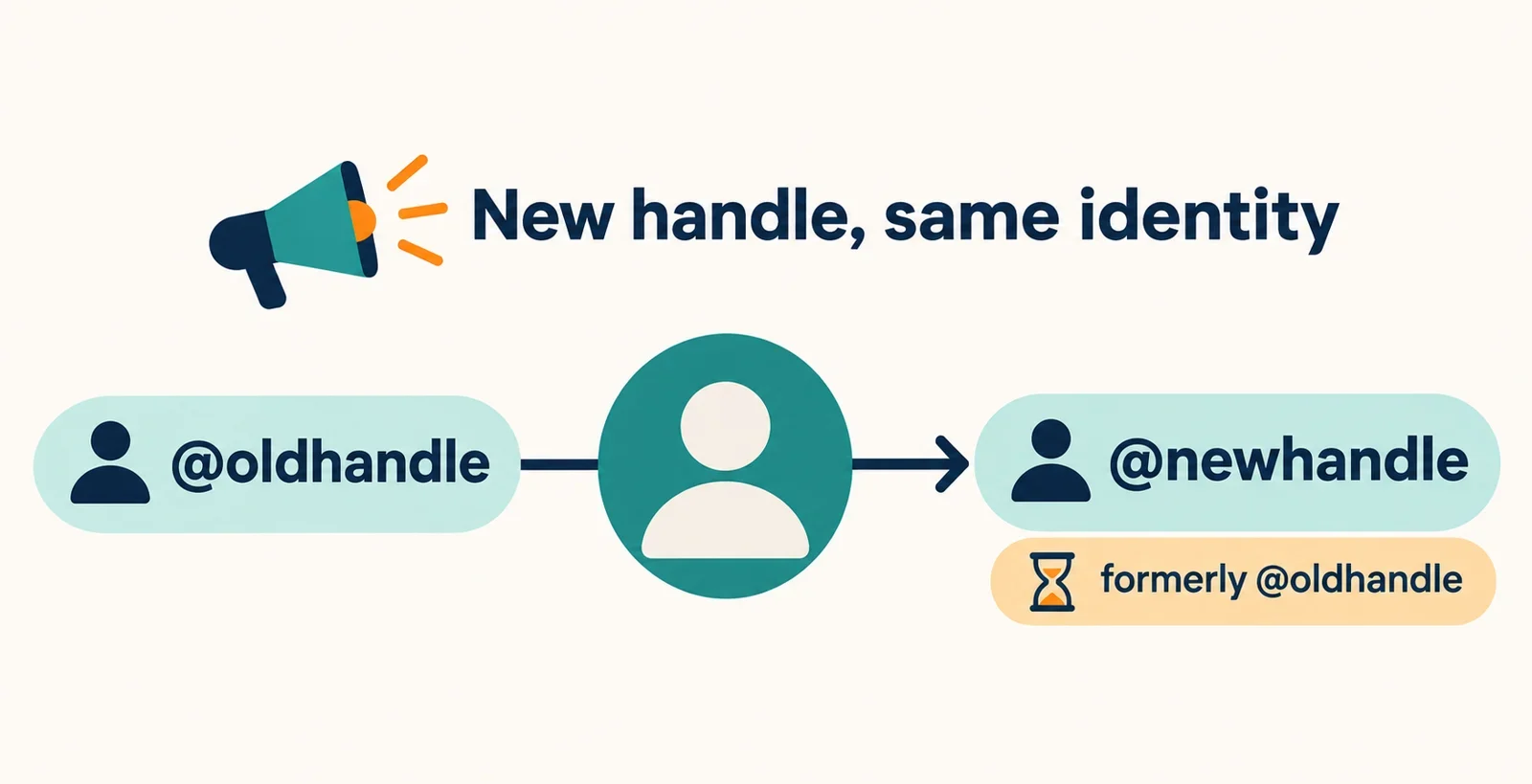
Introduce a generated username by showing followers a clear connection between the old handle and the new one. Choose a recognizable candidate, verify it on the intended platform, and prepare a short announcement. During the transition, consider keeping your familiar profile image and adding a temporary former-name reference wherever the platform permits.
Before making the change, prepare the links and profile text you control. Then review the result as a follower would encounter it: a name, an image, a message and a working destination. Treat this as a communication plan, with checks tailored to your platform and audience.
Decide which name you need to change
Open the intended platform’s account settings and look for the name fields available to you. If it offers both a username and a display name, check its current guidance for what each field changes and where each appears. Write down which field you intend to edit before choosing a replacement.
Next, review how you currently identify yourself in your profile and posts. Is a particular word, nickname or project name the connection you want followers to retain? Use that connection as a decision criterion. If changing both name fields is optional, consider keeping one familiar while introducing the other.
Make a short change note for yourself: “I’m changing [field] from [old value] to [new value], while keeping [recognizable detail].” For a hypothetical account, that might mean changing a handle while retaining the same visible nickname and avatar, if the platform allows it. This gives your later announcement a precise starting point.
Generate a shortlist with a recognizable connection
Use a non-sensitive interest or image as your starting keyword. Choose something you are comfortable making public, such as a broad hobby or an imagined landscape. Avoid building the keyword around private details you would prefer to keep out of an account name.
Generate suggestions, then collect a small shortlist. If the generator presents language or length options, review the available choices and try those relevant to your audience. Treat its output as candidate names to evaluate; acceptance on your chosen platform still needs a separate check.
Compare the candidates using practical questions:
| Check | What to ask |
|---|---|
| Recognition | Which part connects with your existing identity? |
| Readability | Can you read it easily at a glance? |
| Pronunciation | How would you say or spell it aloud? |
| Distinctiveness | Could someone mistake it for another account? |
For a hypothetical change from @maplemoth to @maplemothnotes, “maplemoth” is the proposed continuity cue. Use an example like this to test your own choices, not as an availability suggestion. Read each candidate in your announcement draft, and ask a trusted reader which version makes the connection easiest to understand. Keep a backup candidate in case your first choice fails a platform check.
Check the platform before committing
Before committing, open the intended platform’s current account settings and official help. Check the exact candidate, including punctuation and spelling. A generated suggestion alone is not confirmation that you can use it.
Work through these questions:
- Is this exact username available to your account?
- Which characters and length does the platform currently permit?
- Are there limits, waiting periods or other conditions on changing this field?
- What happens to the former handle after you change it?
- What does the platform say about old profile links, redirects and reuse of that handle?
Record the answers that affect your plan before pressing a confirmation button. If a rule is unclear, use the platform’s support options or postpone the change until you can verify it. In particular, make your link-update plan around the new destination; rely on a redirect only if the platform currently confirms the behavior you need.
Recheck your preferred candidate when you are ready to proceed. If it is rejected, return to your shortlist and repeat these checks for the alternative. Adjust the announcement and prepared links to match the final spelling.
Prepare a temporary bridge between names
Draft a temporary reference such as “Formerly @oldhandle” for a suitable profile field, subject to the platform’s rules and available space. Pair it with your new name in a way that makes the relationship explicit. If the field cannot accommodate that wording, consider another permitted place for the explanation.
Keep your familiar profile image during the initial transition if that fits your situation. Review it alongside the planned name and text: would someone who knows the old account have a recognizable detail to connect with? Consider leaving unrelated profile changes for a later review so the name change has a focused explanation.
Decide in advance how you will review the temporary reference. Use practical signals, such as whether your main links have been updated and whether people are still asking about the change. Choose a review point that suits your posting habits; avoid assuming one fixed duration works for everyone.
Before removing the reference, check that your announcement and updated destinations still provide a useful connection for anyone returning after an absence.
Write an announcement followers can recognize
Write an announcement that names the old handle, names the new handle and states that the account is continuing. Keep the connection near the beginning, where a reader can understand it without extra context.
Same account, new username: @newhandle, formerly @oldhandle. Please use @newhandle when looking for this account.
Replace every placeholder and check the spelling against the final account settings. Include a short reason if it helps your audience, such as choosing a name that better reflects your current interests. Keep that explanation consistent with your actual reason for changing.
If you announce before the change, label the new handle as planned and confirm it again after the update succeeds. If you announce afterward, check that the account already shows the new details. Avoid describing an unconfirmed candidate as your active username.
Use a format your audience can access, and place the announcement where the platform permits. Before publishing, read it on its own: can someone identify both names and understand that they refer to the continuing account?
Update and test the links you control
List the places where you control a link or recurring reference to your account. Check other profile bios, your website, email signatures and any reusable text you regularly publish. Include visible handle text as well as clickable links.
For each entry, note three things: its location, the current destination and the replacement you intend to use. Prepare edits before the change where practical, then apply them once the new address is confirmed. If a reference belongs to someone else, record it separately so you can decide whether to request an update.
Test each updated link by opening it and checking the destination account’s visible identity. Confirm the spelling and destination rather than treating a successful page load as the whole check. Where practical, repeat the test in a browser session that is not signed in to your account, and observe what an arriving visitor can access.
If an old link still works, keep updating the references you control according to your plan. Base any decision to retain an old destination on the platform’s current guidance about that specific behavior.
Check the transition from a follower's perspective
Review the transition as a short journey. Start with a link from another profile or your website, open the destination, read the visible name and former-name reference, and find the announcement. Check whether those pieces tell the same story.
Ask a trusted reader to try that journey if useful. Give them a concrete task: “Find this account from the link, then tell me what name changed and whether it is the same account.” Use any hesitation to identify an edit, such as clearer wording or a corrected link.
Keep a brief list of remaining work: outdated references, an announcement that needs correction or a temporary label due for review. If someone asks about the name change, use that question to check whether the explanation should be easier to find.
Remove the former-name reference when your review suggests it has served its purpose. Keep checking links you reuse, and make any later profile changes with the same attention to recognizable details.